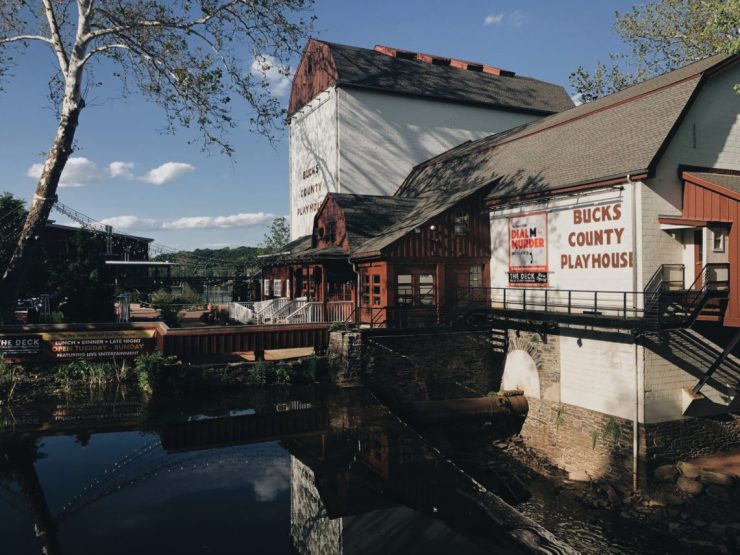
The River Town of Hope

An old grist mill caught my eyes. I was standing at the edge of the green truss bridge in Lambertville that spans the gentle Delaware and opens up to a twin town which does not however lie in New Jersey. Cross a line on the bridge and you find out that you have left the state of New Jersey behind; that now, my darling, you have entered the state of Pennsylvania.

With just the crossing of a bridge, we were in another town.

New Hope of the Lenni Lenape Indians; of a thousand acres of land gifted by King Charles II to a certain William Penn; of a succession of men who operated ferries and mills; of an industrial past riddled with working mills and the legacy of a small community that worked hard to produce paper, quarry stones and grind grains. That is till a bohemian lot of artists were attracted to the picturesque quality that this town presented with its farrago of farmhouses, mills and barns, creeks, and the river that slips gently by it.

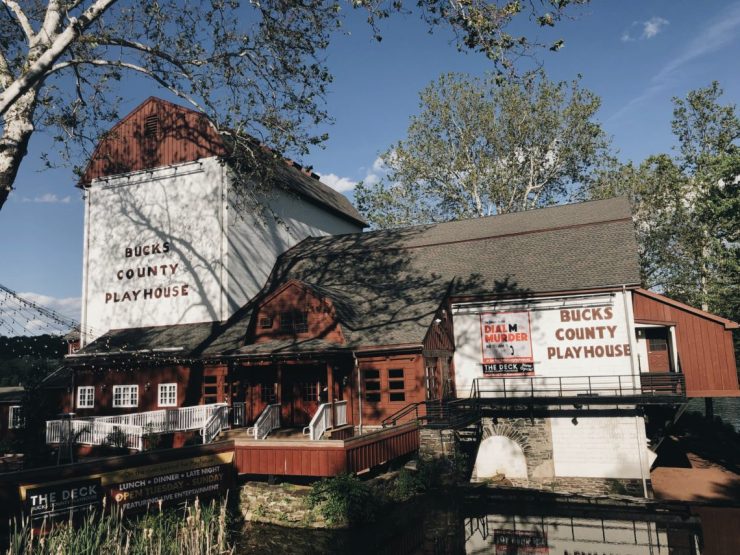
Towards the end of the 1930s, a group of aesthetes bought the grist mill that you see in the lead picture. They transformed it into a summer theatre. The Bucks County Playhouse, where so many famous actors and actresses honed their trade before they tried their luck on Broadway. That is how artists put New Hope on the map for art aficionados. And then, the rest of us followed on a day drenched with sun, filled with hope about this town that called itself New Hope. Note that the mills had their say in deciding its title for there were the Old Hope Mills which burned down, only to be replaced with mint-fresh mills built as the New Hope Mills.

Right from the main street where the bridge disgorged us, we were hard pressed for which direction to take. But there was no chance of leaving any road unexplored here. There was a roll-call of restaurants and cafes, ice cream shops, hippie shops selling harem pants and Buddhas, decor stores where you could step in and complete wooden jigsaw puzzles only to find some pieces broken, gourmet popcorn shops, food markets promising a tantalising mix of world cuisine…and then there were charming old properties, stone houses and mansions. And a stone bridge below which a somnolent creek crawled past the photogenic grist mill of my fancies before it emptied into the Delaware river.

So what did we do? We ambled around as much as one could; had strange conversations with mothers holding onto occupied loos for their sons; scoffed delicious ice creams; bought popcorn; realised that a credit card had gone missing and which therefore an irate husband rushed to retrieve with remarkable scowls and mutterings; and perched ourselves at a quiet bar humming with couples, by the creek.

Weeping willows hanging shyly in veils of green around us, the waters of the creek sliding by in smooth emerald sheets while all along catching the reflection of leafy trees lining its banks and the dappled sunlight, and flights of sparkling wine. We were caught in the moment.

2019-06-06 09.01.54 1.jpg
A man-made waterfall at the former 19th century grist mill. Credit: Adi.
2019-06-06 09.01.55 1.jpg
Besotted by this old mill, so naturally you shall be treated to every possible angle of it. Credit: Adi.
2019-06-06 08.52.45 3.jpg
Baroque Victorian catches the eye on the main street. A man called Charles Crook had the mansion built for his wife who was a fan of scrollwork. Thus its elaborate stage-like front. Additionally, it was the first house in Bucks County to boast of running water. Mansion Inn is an 18th century property, and though the inn itself did not exist then, it is the site where George Washington and his men dined before heading for a battle of the American Revolution. Credit: Adi.
2019-06-06 09.01.53 1.jpg
A town of settlers, New Hope has these rows of picket-fenced historic brick and stone properties sheathed in ivy, that make the heart skip a beat. Historic plaques often tell of a house’s former owner and their importance in the scheme of things. Credit: Adi.
2019-06-06 09.10.43 1.jpg
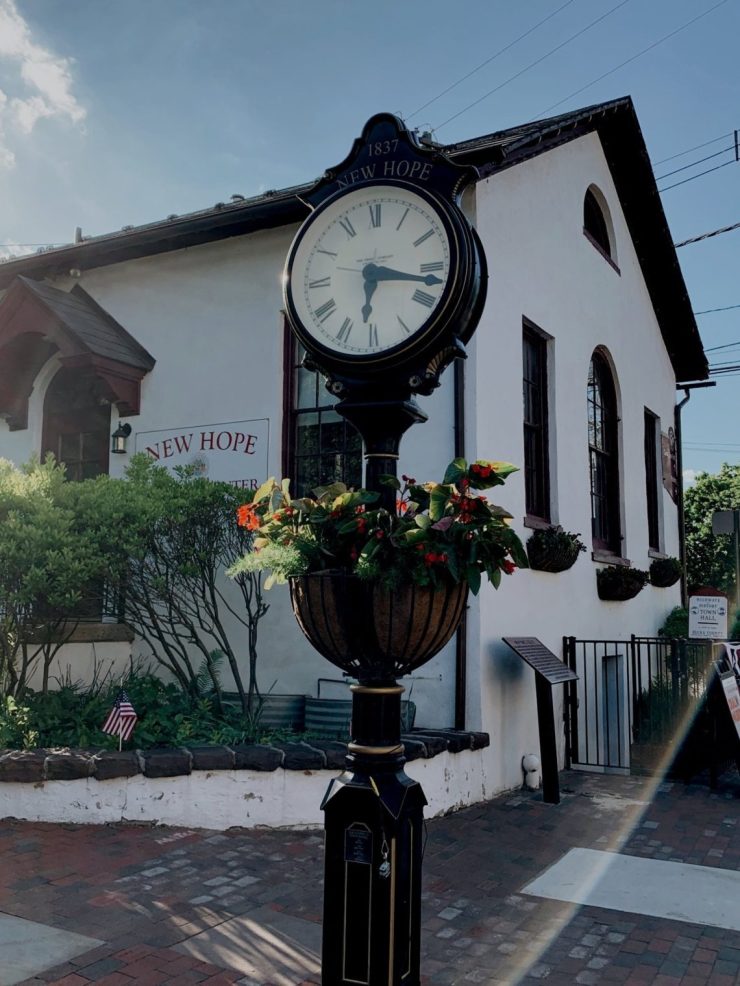
The Town Hall once served as New Hope’s town hall, school and jail. Credit: Anuradha Varma.
2019-06-06 09.01.51 1.jpg
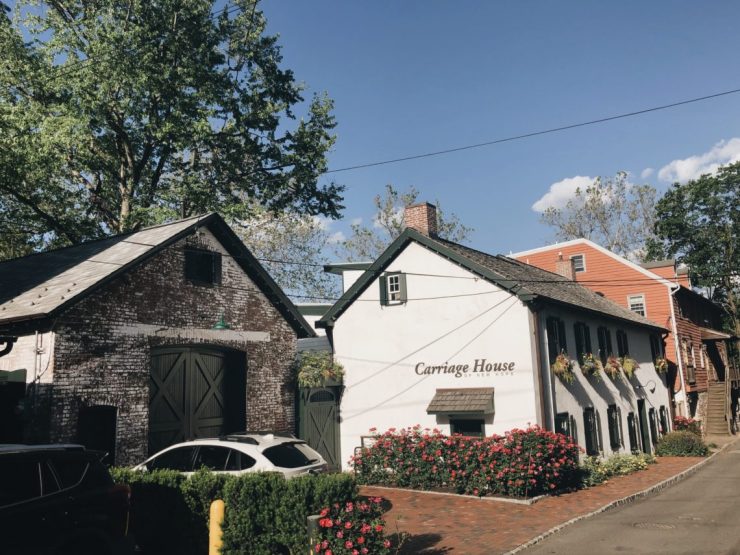
One of the oldest houses in New Hope is this, Carriage House. You can catch a night’s stay or more here because it is a bolthole for the keen, with exposed wooden beams and hardwood floors. Credit: Adi.
2019-06-05 09.02.45 1.jpg
A capture of my sister-in-law at the bar along the Aquetong Creek. Credit: Anuradha Varma.
2019-06-06 09.10.31 1.jpg
Sparkling wines and green creeks. Credit: Anuradha Varma.
2019-06-06 09.10.17 1.jpg
Crisp pita and divine avocado dips to cool scowls away. Credit: Anuradha Varma.


20190614_165128.jpg
Before falling upon that plate of grilled octopus with frenzy. Credit: Anuradha Varma.
2019-06-06 09.01.50 1.jpg
The bar by the creek. Credit: Adi.
2019-06-06 09.01.52 3.jpg
Picture perfect. However, that man on the bottom left hand side is not a dummy. For a moment I wondered if he was. Credit: Adi.
IMG_5586.jpg
Old grist mills can be grist for your fancy. Credit: Anuradha Varma


Whoop Whoop, These Summer Days of Bobbsey Twins and Vintage Gold Glasses

I woke up feeling chipper today. Was it because I was in a state of almost intoxicated sleep where I drifted in and out thinking, here I am getting out of bed now, but there I was, still in that beatific place? Or, was it because my husband appeared suddenly to lift me straight out of bed and deposit me in the bath? I could not tell, but the latter is rare commodity nowadays with Adi wading incessantly through a bottomless pit of work (on his part, the impetus would have been decidedly his morning dose of blended cold coffee).

Strangely enough, it is also one of those mornings when my body feels unaccountably light and frothy, ready to whiz up the intimidating Kanchenjunga (I told you, some kind of foolish and manic goodness this), or even brave the mugginess inside a cheese factory to churn cheese. If you have been inside of one of those, you know it is a feat. If you have not, imagine a steam room where you would not last more than 10 minutes. Or actually, you could just imagine plodding through the streets of Calcutta/Chennai in summer. Strange because it is the time of the month when my hormones do their crazy dance, and I feel far from dancing, more like curling up with a book into a ball of misery.

To not drive my male readers into the farthest corners of the universe, let me get on with the pleasant discoveries of this season. My sister-in-law was visiting us, sans family. She had heard from a friend about the antique towns of New Jersey. Imagine our chagrin. We have been here two years, and yet, we had no blooming idea about their existence.

It is thus that we found ourselves an hour away from home in a town called Lambertville.

Lambertville. When my sister-in-law read its name out loud as an antiquing town upon the Delaware river, my mind started twirling. Intimate cafés, leafy streets, sprawling antique stores, people ambling through a riverside town…We drove into this town that I had conjured in my mind. As delightful as Cirencester in its antiquing prospects. With as large antique stores that made the heart flutter with the anticipation of experiencing past pleasures.

The Lenni Lenape Indians lived in Lambertville before it was colonised. After the land was bought off them, the first resident of the town was a gentleman called John Holcombe. This was sometime in the early 1700s. Why is it not called Holcombeville then? Well, in came a family next. The Coryells. They developed a portion of the town and even started a ferry here, which was subsequently used by George Washington and his men, when they were quartered here during the Revolutionary War. But was it called Coryellville, or even Georgetown, as the Coryells wanted, after one of their sons who served in the New Jersey forces? No sir, no. The honour went to the Lambert family who swished into town a century later, in the early 1800s. The Coryells seethed, but that is all they could have done anyway, stewed in righteous indignation, because John Lambert was a New Jersey governor. And as we know, politicians are politicians for a reason.

The sky was chirping blue that morning, and the sun, it shone with no cares or clouds to mar its radiance. It was the kind of day when the Delaware glistened like a sheet of gently rippling mossy green, in no particular rush to be anywhere else.

People of the ‘Gram, be warned. In Lambertville, you lose your mind.  Historic mansions and brick row houses straddle its tree-lined streets. The architecture is Victorian and Federal in style, at once so classic and lovely that you want to walk in and declare one of them to be yours from this day on. The small churches with their aged visage and stained glass windows evoke awe and even the cafés are housed in period properties along quiet bylanes.

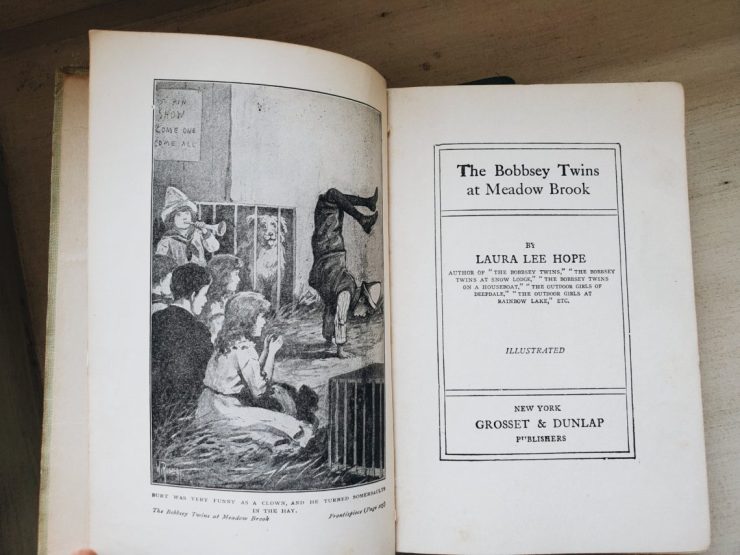
I went batty inside the antique shops. At one, I lay my hands on a pair of gold, wire glass frames. They were delicate, prompting me to picture their former wearer as a twittering old lady with powdery, white hair. Then there were some tatty Bobbsey Twins numbers I grabbed greedily. The chatty woman at the till informed me that they were from an old estate she had been to. She also told the elderly man she was conversing with, “Like this young lady, this generation loves everything old. All these things I buy at auctions, especially books, they are snapped up.” At this point I butted in: “Umm, I am not really as young as you make me out to be.” The man nodded wisely here and said, “Best not to go there.”

2019-06-05 01.53.43 1.jpg

2019-06-05 01.53.32 1.jpg

We continued to flit from store to store in a leisurely manner, by the end of which Adi flopped down at a bench outside a cheese boutique selling farm-fresh cheeses — and declared that he was Done. Oh, but were we? After nibbling on some sharp cheeses, we found a Turkish man selling Azerbaijanian, Kazakh and Turkish carpets and bags, and my sister-in-law was stoked by her finds. It was the perfect day for rummaging through interesting wares and cracking good bargains, and may I add, forgetting credit cards behind at aforementioned Turkish shops. Which meant a thunderous husband, and later, Turkish sweets from the man who returned the card to Adi. Here I have to slip in surreptitiously that I also forgot my phone at home. The suffering was all mine. All those photographs waiting to be clicked. Sob. Naturally I have to borrow them from Adi, but he is on a constant stream of calls, so I shall have to leave the beauty of the artist town of Lambertville to the workings of your pretty mind.

But before I leave, it would be amiss of me not to mention the old canal that runs alongside Lambertville’s old railway station. The canal that was laid out by thousands of Irish immigrants in the 19th century till a wave of cholera swept through town. Most of those poor labourers lie buried alongside this canal where people stroll or bike today on long, summery days. Odd to think of these stories that stay concealed behind the most serene facades.

I wish that this was all. For Adi was knackered. But why be satisfied with one bohemian town when there may be the promise of another lurking around the corner? In our case, right across the Delaware and the bridge sitting astride it, was the town of New Hope. Naturally, we were thrilled to bits. Two artist villages for the price of one. We had struck gold.