The River Town of Hope

An old grist mill caught my eyes. I was standing at the edge of the green truss bridge in Lambertville that spans the gentle Delaware and opens up to a twin town which does not however lie in New Jersey. Cross a line on the bridge and you find out that you have left the state of New Jersey behind; that now, my darling, you have entered the state of Pennsylvania.

With just the crossing of a bridge, we were in another town.

New Hope of the Lenni Lenape Indians; of a thousand acres of land gifted by King Charles II to a certain William Penn; of a succession of men who operated ferries and mills; of an industrial past riddled with working mills and the legacy of a small community that worked hard to produce paper, quarry stones and grind grains. That is till a bohemian lot of artists were attracted to the picturesque quality that this town presented with its farrago of farmhouses, mills and barns, creeks, and the river that slips gently by it.

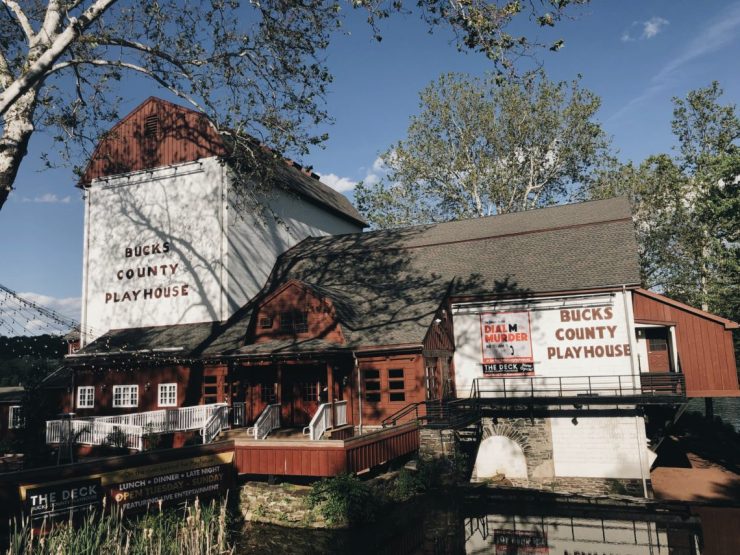
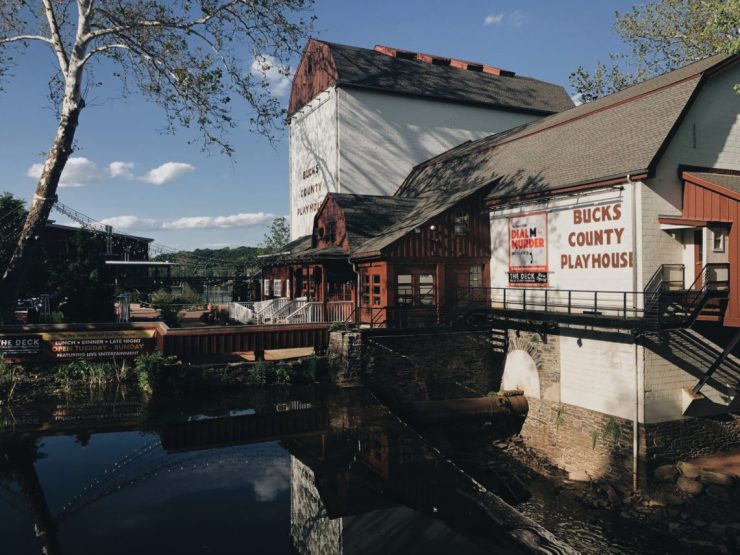
Towards the end of the 1930s, a group of aesthetes bought the grist mill that you see in the lead picture. They transformed it into a summer theatre. The Bucks County Playhouse, where so many famous actors and actresses honed their trade before they tried their luck on Broadway. That is how artists put New Hope on the map for art aficionados. And then, the rest of us followed on a day drenched with sun, filled with hope about this town that called itself New Hope. Note that the mills had their say in deciding its title for there were the Old Hope Mills which burned down, only to be replaced with mint-fresh mills built as the New Hope Mills.

Right from the main street where the bridge disgorged us, we were hard pressed for which direction to take. But there was no chance of leaving any road unexplored here. There was a roll-call of restaurants and cafes, ice cream shops, hippie shops selling harem pants and Buddhas, decor stores where you could step in and complete wooden jigsaw puzzles only to find some pieces broken, gourmet popcorn shops, food markets promising a tantalising mix of world cuisine…and then there were charming old properties, stone houses and mansions. And a stone bridge below which a somnolent creek crawled past the photogenic grist mill of my fancies before it emptied into the Delaware river.

So what did we do? We ambled around as much as one could; had strange conversations with mothers holding onto occupied loos for their sons; scoffed delicious ice creams; bought popcorn; realised that a credit card had gone missing and which therefore an irate husband rushed to retrieve with remarkable scowls and mutterings; and perched ourselves at a quiet bar humming with couples, by the creek.

Weeping willows hanging shyly in veils of green around us, the waters of the creek sliding by in smooth emerald sheets while all along catching the reflection of leafy trees lining its banks and the dappled sunlight, and flights of sparkling wine. We were caught in the moment.

2019-06-06 09.01.54 1.jpg
A man-made waterfall at the former 19th century grist mill. Credit: Adi.
2019-06-06 09.01.55 1.jpg
Besotted by this old mill, so naturally you shall be treated to every possible angle of it. Credit: Adi.
2019-06-06 08.52.45 3.jpg
Baroque Victorian catches the eye on the main street. A man called Charles Crook had the mansion built for his wife who was a fan of scrollwork. Thus its elaborate stage-like front. Additionally, it was the first house in Bucks County to boast of running water. Mansion Inn is an 18th century property, and though the inn itself did not exist then, it is the site where George Washington and his men dined before heading for a battle of the American Revolution. Credit: Adi.
2019-06-06 09.01.53 1.jpg
A town of settlers, New Hope has these rows of picket-fenced historic brick and stone properties sheathed in ivy, that make the heart skip a beat. Historic plaques often tell of a house’s former owner and their importance in the scheme of things. Credit: Adi.
2019-06-06 09.10.43 1.jpg
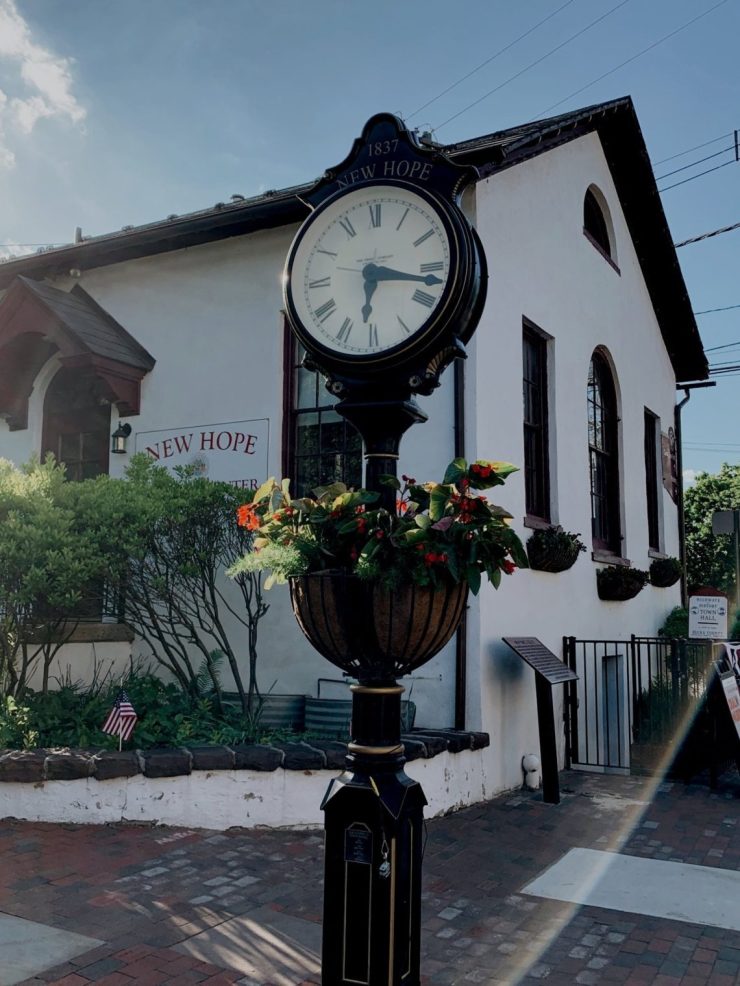
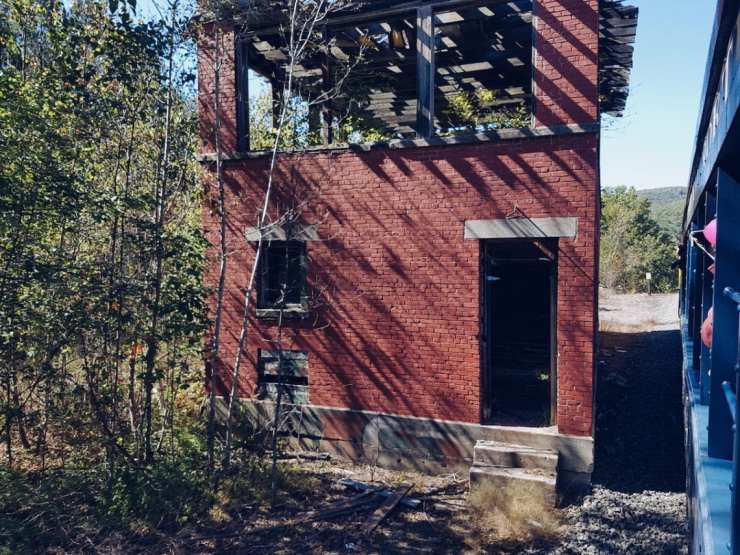
The Town Hall once served as New Hope’s town hall, school and jail. Credit: Anuradha Varma.
2019-06-06 09.01.51 1.jpg
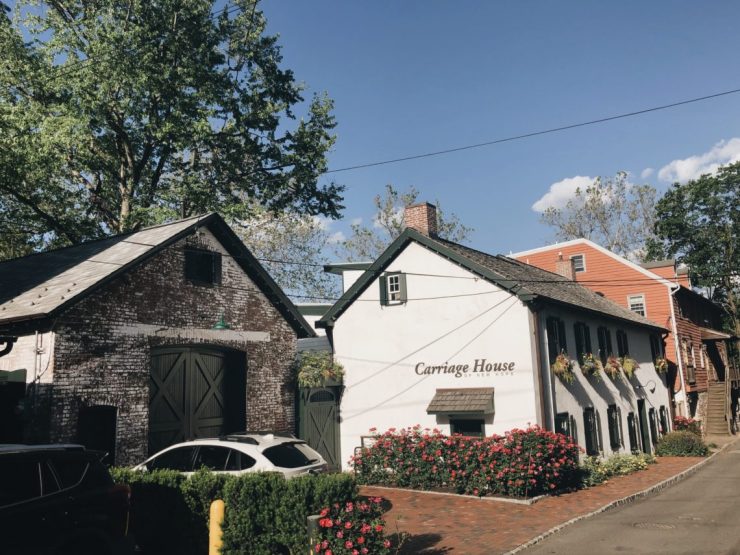
One of the oldest houses in New Hope is this, Carriage House. You can catch a night’s stay or more here because it is a bolthole for the keen, with exposed wooden beams and hardwood floors. Credit: Adi.
2019-06-05 09.02.45 1.jpg
A capture of my sister-in-law at the bar along the Aquetong Creek. Credit: Anuradha Varma.
2019-06-06 09.10.31 1.jpg
Sparkling wines and green creeks. Credit: Anuradha Varma.
2019-06-06 09.10.17 1.jpg
Crisp pita and divine avocado dips to cool scowls away. Credit: Anuradha Varma.


20190614_165128.jpg
Before falling upon that plate of grilled octopus with frenzy. Credit: Anuradha Varma.
2019-06-06 09.01.50 1.jpg
The bar by the creek. Credit: Adi.
2019-06-06 09.01.52 3.jpg
Picture perfect. However, that man on the bottom left hand side is not a dummy. For a moment I wondered if he was. Credit: Adi.
IMG_5586.jpg
Old grist mills can be grist for your fancy. Credit: Anuradha Varma


A Pennysylvanian Victorian Town

The weekend we drove to Jim Thorpe, an old coal mining town in the Pocono mountains brimming with pumpkins and haunted houses, we noticed a huge banner on a highway route through the Lackawanna County. A well-lined face crinkled by a grin and a head full of silver hair stared back at me. The man, it turns out, had disappeared. Yet another of those baffling cases where the family woke up one morning to find their husband and father to have vanished. My inner Wallander was mystified. It was as if we were on the sets of a drama like The Missing, a chilling prospect.

Weaving our way through roads flanked by trees which were still in the nascent stage of light oranges and pinks, we reached the town of Jim Thorpe surrounded by lush hills that had turned a brooding shade of green under the blue-grey skies. We deposited the car in the parking lot next to the Lehigh river and started for the town of Jim Thorpe, following a demarcated path. That is when I stepped out of line. For a second though. I had detected an old railroad crossing gate and wanting to photograph it I had made a beeline for it. No cars incoming too, but hey-ho, a booming voice rang across the parking lot on that cold October noon like a bullet, ‘RETURN TO THE WALKWAY RIGHT NOW!’ piercing my skin and senses with precision. I scurried, suitably chastened, back to my place next to Adi on the path. Mortification.

I espied a bunch of people crossing the parking lot in the exact way I had attempted to, the next morning. The same people in the parking lot booth, yet they turned a blind eye to the errant six. Life — it works in mysterious ways.

In Jim Thorpe, you meet cordial railway men. They point out scenic geographical features of the Jim Thorpe National Park within which the town is located. You shall chug through the park if you buy a ticket for the steam train, and you hear about black bears who romp around the market square, rummaging in bins, when they fall short of food. The Lehigh River gleamed emerald green in places, in others midnight blue and rust (with mineral deposits), as it skirted the town, passing through a landscape mottled with ancient woodlands of white pine, rhododendron, ferns, abandoned sheds and railroad. A peaceful scenery punctuated by the gushing sound of waterfalls making their way into a gorge. And the few hikers and cyclists who waved at the train passing by.

Them training their cameras on the train. Us training ours on them.

Later after we had had our fill of regressing to a state of child-like glee, we walked around the narrow alleys and winding roads of Jim Thorpe that was named after a former Olympian athlete called Jim Thorpe – it had no connection with him whatsoever though. The words ‘Mauch Chunk’ leapt out at us from signages. The Lenni Lenape tribe is supposed to have named the town for the mountain nearby, Mauch Chunk or ‘the Mountain of the Sleeping Bear’.

Atmospheric cafes; stone churches stained black by the passage of time; second-hand bookshops where I went into a tizzy, laying my hands greedily on beautifully bound tomes; antique shops; stores selling dream catchers and trippy, psychedelic stuff; boutiques selling handmade, embroidered leather boots; former old jails where the Molly Maguires, an outfit of Irish immigrant coal mine workers, were imprisoned and executed; old ladies with faces like immobile masks sitting on their old porches (straight out of a supernatural thriller in my fervid imagination).

Jim Thorpe has a fair bit going on. You might want to cycle along the abandoned railroad because it does seem like the kind of activity where you feel at one with the old forests around you, breathing in the scent of the pine trees, the possibility of meeting a black bear… but if you end up there, remember not to step out of bounds of the path in the parking lot, okay? The grinches shall get you.

2017-10-02 07.58.48 1.jpg

2017-10-02 07.58.48 2.jpg

2017-10-02 08.52.01 1.jpg

2017-10-04 09.57.52 1.jpg

2017-10-04 10.19.24 1.jpg

2017-10-02 08.07.36 1.jpg

2017-10-04 10.52.29 1.jpg

2017-10-07 03.56.34 1.jpg

2017-10-04 11.02.03 1.jpg

2017-10-02 08.51.55 1.jpg

2017-10-02 07.58.57 1.jpg

2017-10-02 07.58.51 1.jpg

2017-10-02 07.58.52 1.jpg

2017-10-02 08.07.35 1.jpg

2017-10-02 08.51.49 1.jpg

2017-10-02 08.07.44 1.jpg

2017-10-01 03.12.37 1.jpg

2017-10-02 07.58.43 1.jpg

2017-10-02 08.07.49 1.jpg

2017-10-04 11.02.09 1.jpg

2017-10-04 11.02.07 1.jpg

2017-10-02 08.42.52 1.jpg

2017-10-02 08.07.51 1.jpg

2017-10-02 08.07.53 1.jpg

2017-10-04 11.02.05 2.jpg

2017-10-04 11.02.08 1.jpg

2017-10-04 11.02.07 2.jpg